


This page outlines the quality control procedures and inspection standards applied to Designito collections of Italian reproduction furniture: sofas & sectionals, lounge chairs, daybeds, and coffee tables. Quality control focuses on consistency, structural integrity, material performance, and functional accuracy.
Quality standards described here apply across production batches. Final inspection outcomes may vary slightly due to material characteristics and configuration.
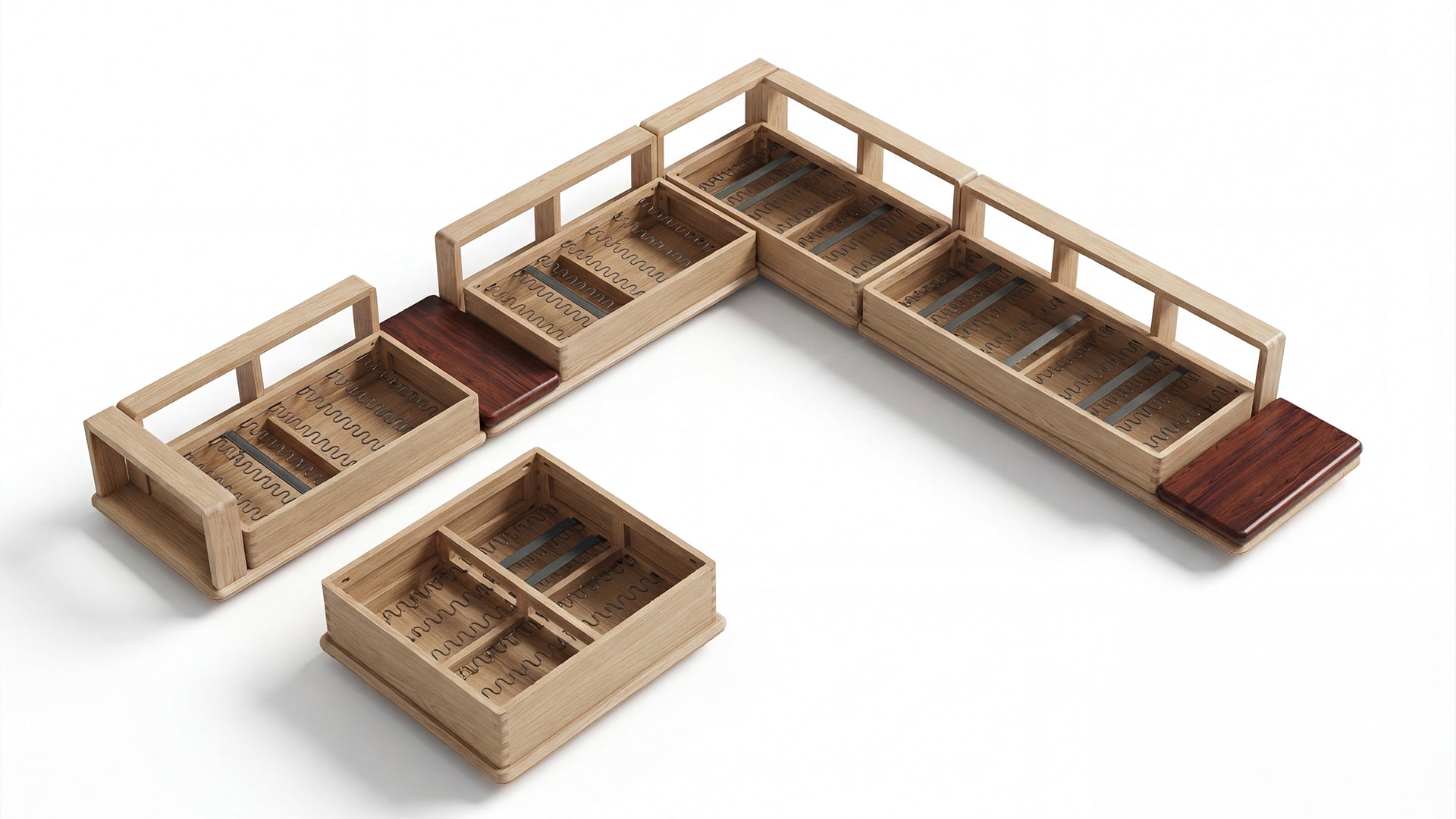
1. Quality Control Philosophy
Quality control is treated as a continuous process rather than a single final checkpoint. Inspections are performed at multiple stages to reduce variance and identify issues before final assembly.
These procedures build upon the production methods outlined in our Manufacturing & Craftsmanship overview.
This approach prioritizes repeatability, dimensional accuracy, and long-term performance rather than cosmetic appearance alone.
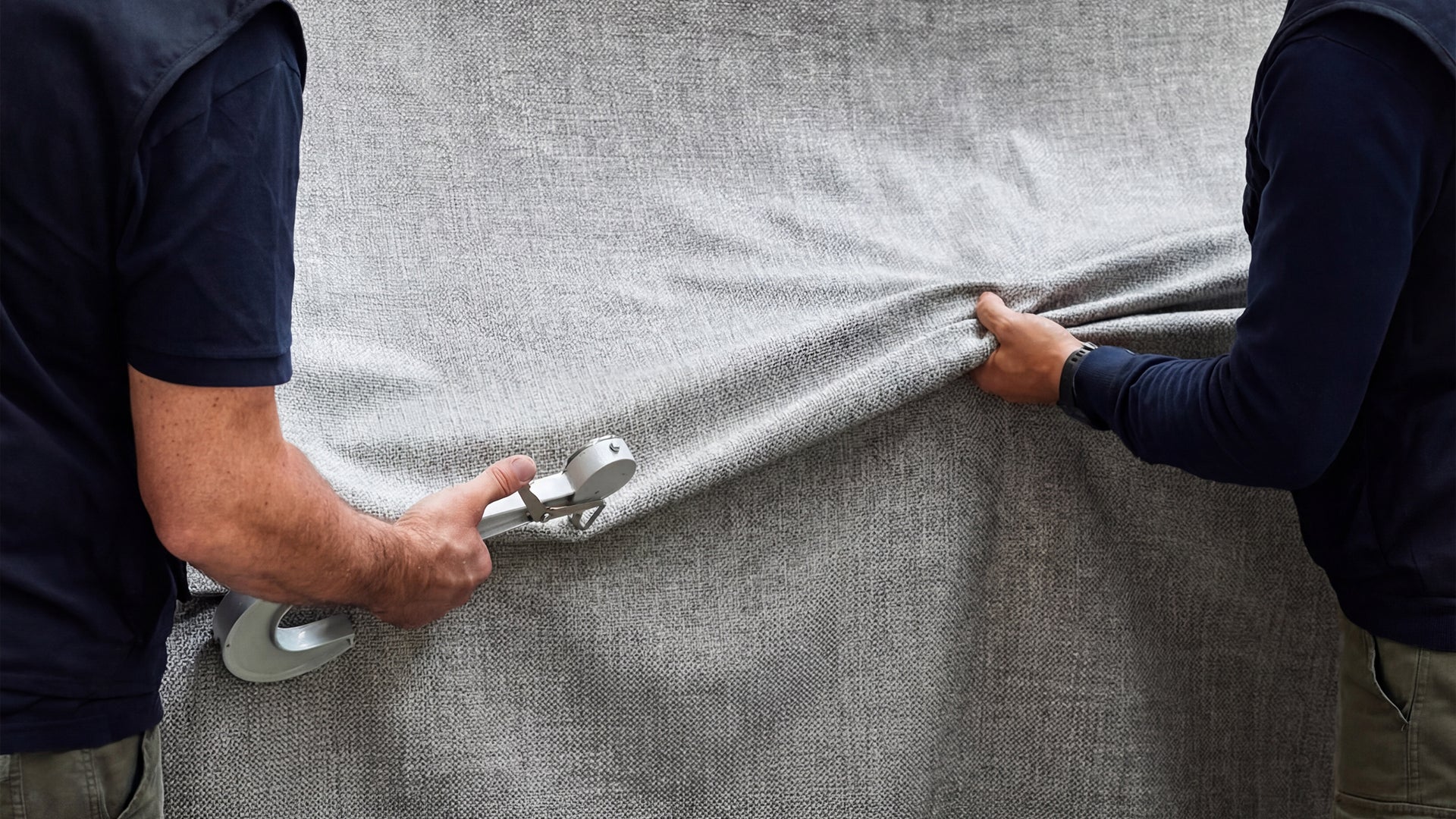
2. Incoming Material Inspection
Raw materials are inspected prior to production to ensure they meet defined specifications.
- Verification of wood moisture content and dimensional stability
- Foam density and firmness checks against specified ranges
- Visual inspection of upholstery materials for defects or inconsistencies
Materials that do not meet baseline criteria are excluded from production to maintain Designito standards.
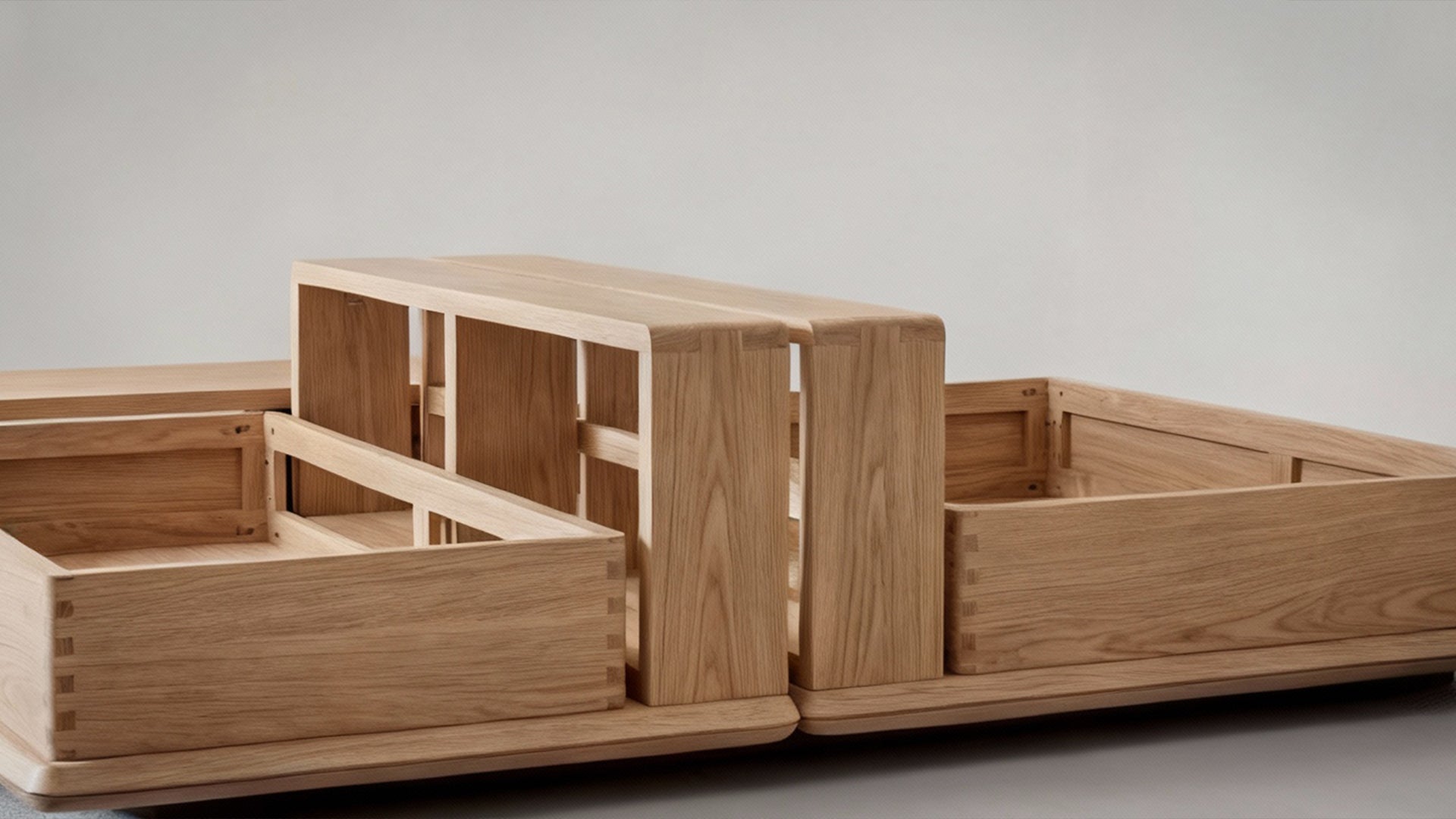
3. Frame & Structural Inspection
Structural components are inspected during and after frame assembly to ensure stability and alignment.
| Inspection Area | Method |
|---|---|
| Joint integrity | Manual stress testing and visual verification |
| Frame alignment | Dimensional measurement and level checks |
| Load-bearing zones | Reinforcement verification |
Frames that fail alignment or stability checks are reworked or rejected. Inspection thresholds are defined internally and reviewed periodically to maintain consistency across production batches.
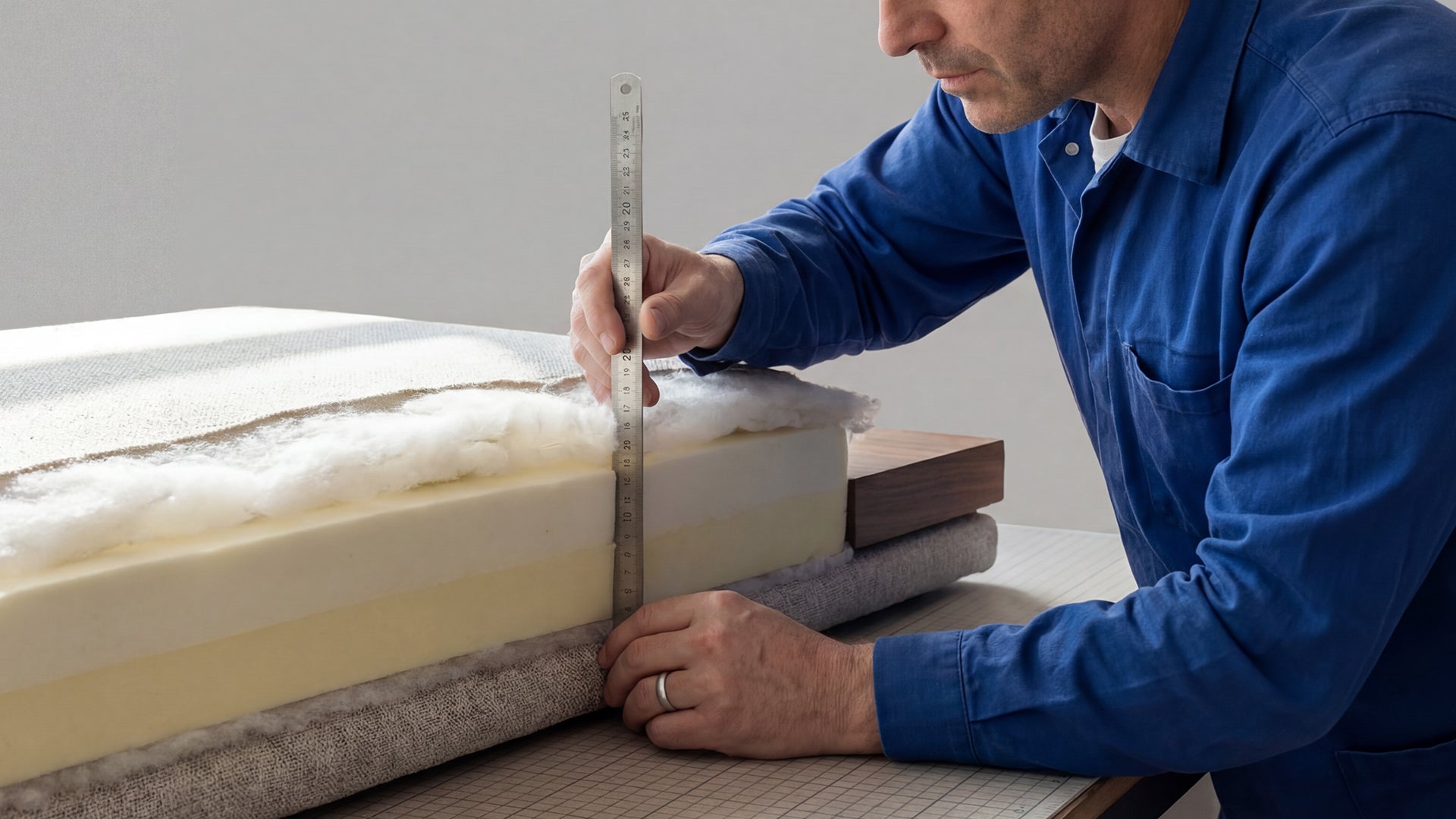
4. Cushion & Comfort Verification
Cushion components are verified to ensure comfort consistency and structural support.
- Foam density confirmation within specified engineering ranges
- Indentation response checks for seating comfort
- Fill distribution checks for down or blended cushions
Comfort testing focuses on repeatable support characteristics rather than subjective softness alone. Material specifications referenced during inspection are defined in our Materials & Specifications documentation.

5. Upholstery & Finish Inspection
Upholstery application and finishing are reviewed during final assembly.
| Area | Inspection Criteria |
|---|---|
| Seam alignment | Straightness, tension consistency |
| Surface finish | Wrinkles, puckering, material stress |
| Edge detailing | Uniformity and attachment integrity |
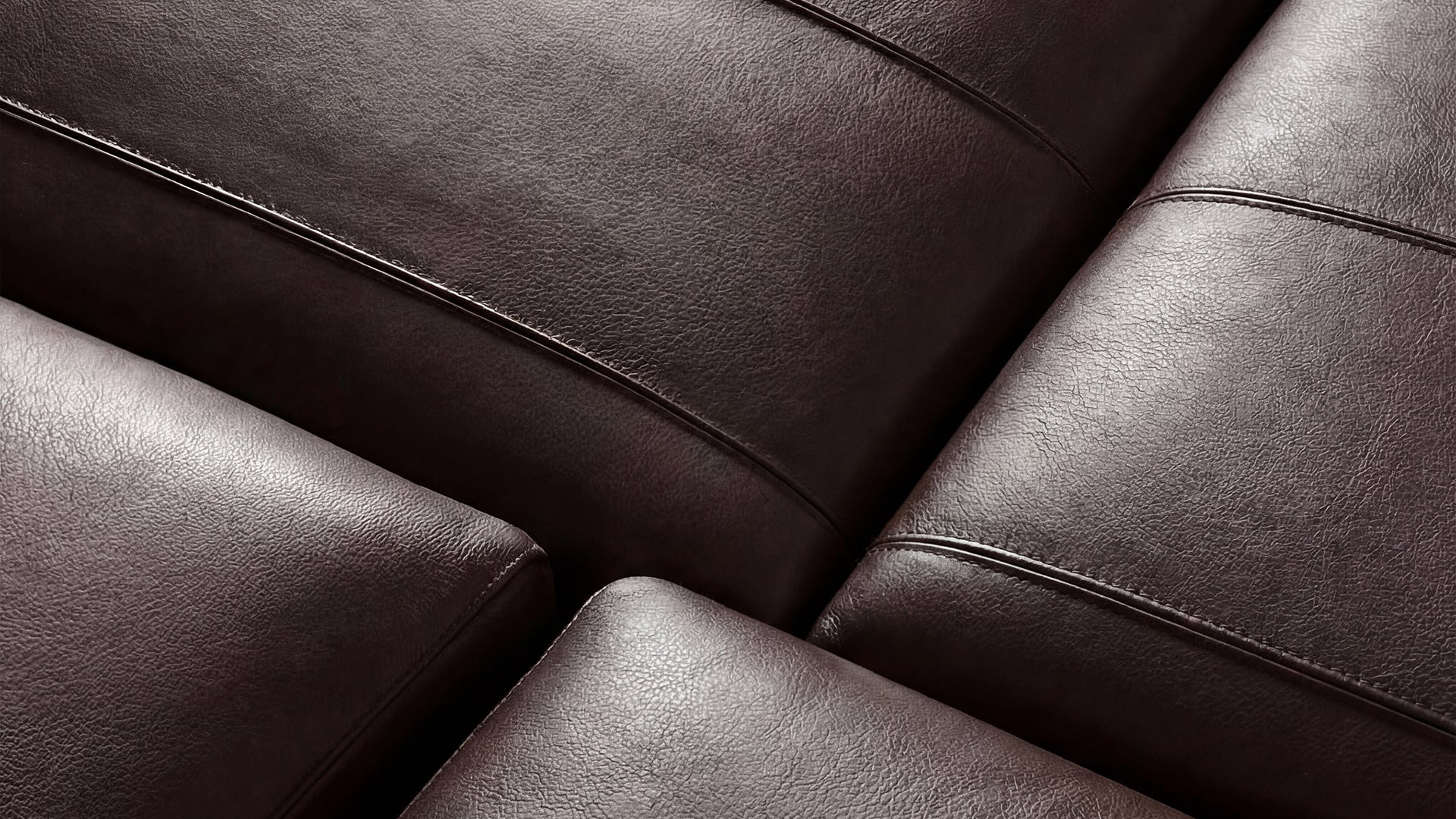
Natural material variation is expected. Structural or functional defects are not accepted.
6. Dimensional Tolerances
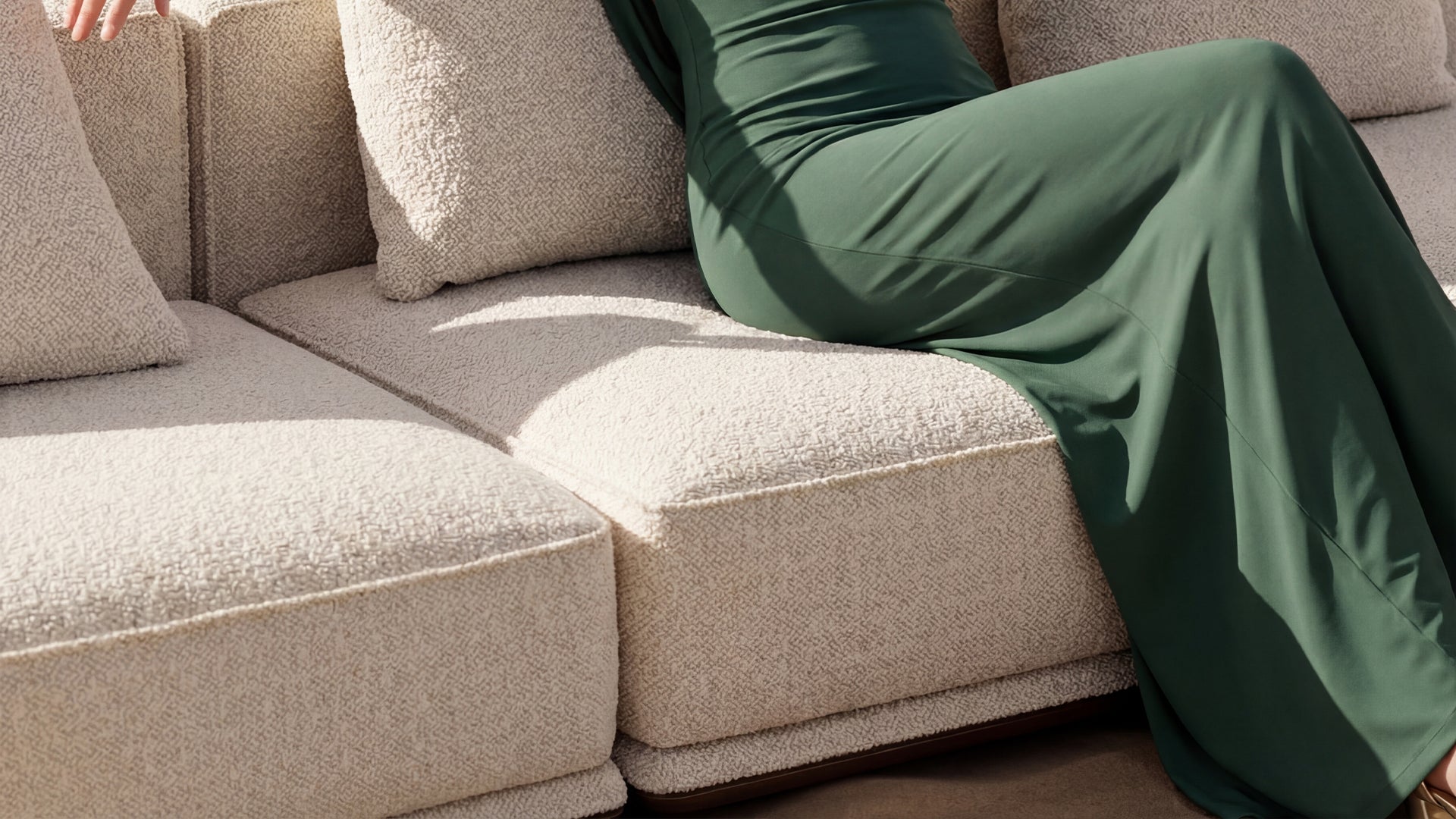
Due to the use of natural materials and hand-applied upholstery, dimensional tolerances are applied.
- Overall dimensions: ±10-15 mm
- Seat height and depth: ±10 mm
- Module alignment: visually level when assembled
These tolerances do not affect structural performance or seating comfort.
7. Final Inspection & Packaging
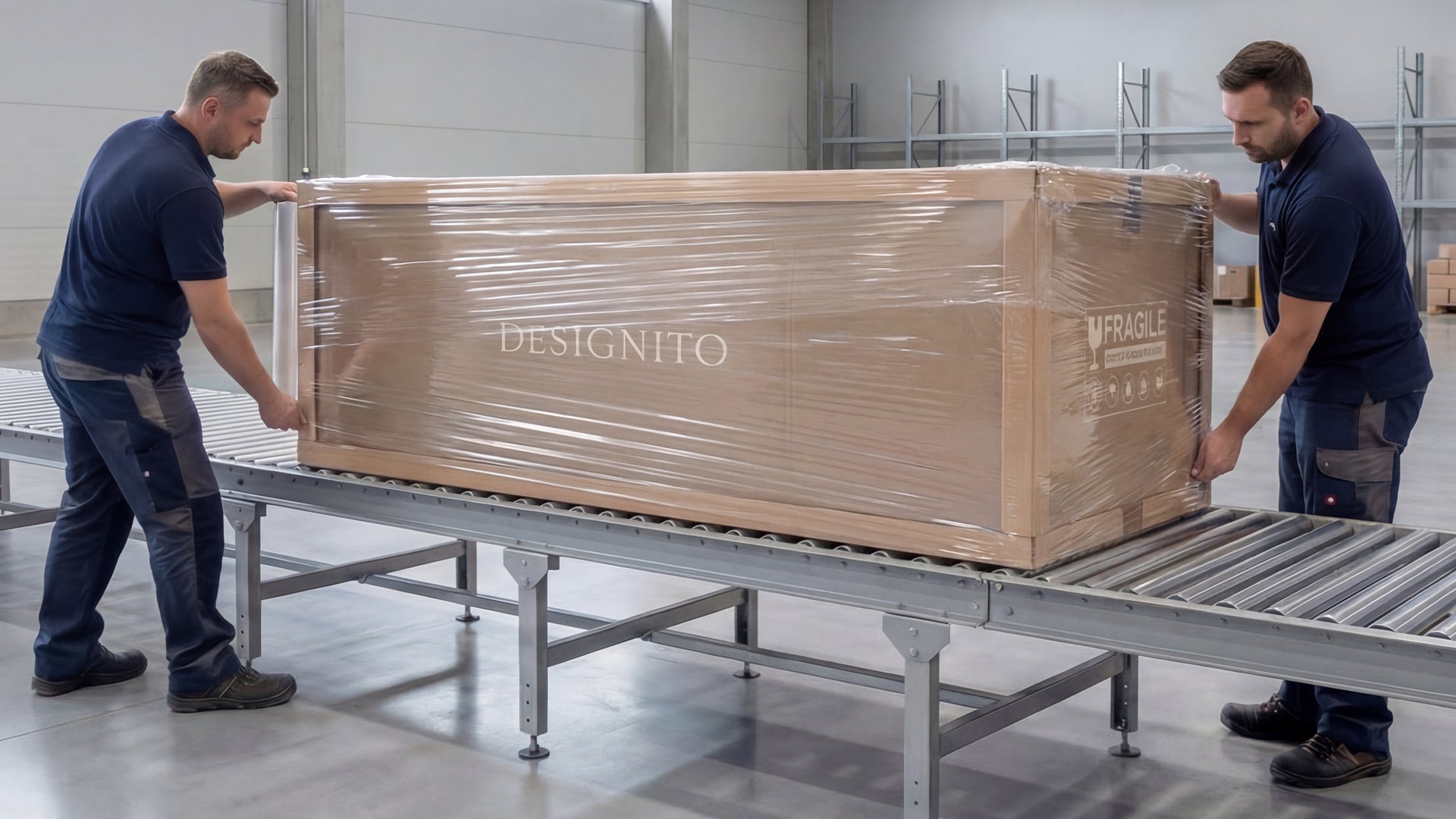
Completed products undergo final inspection prior to packaging.
- Functional verification of modular connections
- Visual inspection under neutral lighting
- Packaging verification to reduce transit damage
Products that do not pass final inspection are corrected before shipment.
Relationship to Warranty Coverage
Frequently Asked Questions
Is every product individually inspected?
Yes. Each finished product undergoes final inspection prior to packaging and shipment.
Are cosmetic imperfections considered defects?
Minor variations in natural materials are expected. Defects that affect structure, comfort, or function are not accepted.
How does quality control affect warranty coverage?
Warranty coverage applies to products that meet inspection standards at the time of shipment. Coverage details are defined separately.